
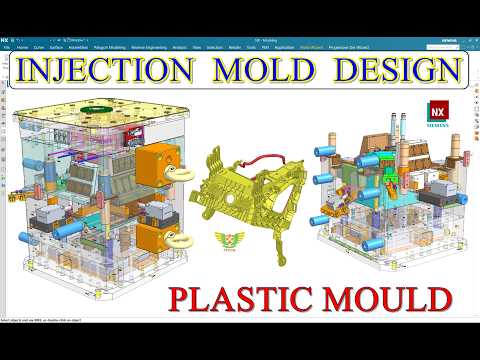
In the high-stakes world of plastic manufacturing, the difference between a successful production run and a costly failure often lies in the quality of the initial mold. For engineers and designers aiming for perfection, mastering SolidWorks 3D mold design has become a non-negotiable skill. This guide dives into the complexities of mold design, focusing on the critical role of hydraulic sliders and the calculations required to ensure seamless operation.
The Role of Hydraulic Sliders in Complex Molds
One of the most challenging aspects of injection mold design is handling undercuts and complex geometries. While traditional mechanical sliders are common, hydraulic sliders offer a level of control and force that is essential for large-scale or high-precision projects, particularly in the automobile industry.
When utilizing SolidWorks 3D mold design, engineers can simulate the movement of these sliders to ensure there is no interference with the core or cavity during the ejection phase. This digital verification prevents mechanical clashes that could lead to expensive tool repairs.
Critical Calculations for Mold Stability
A design review isn't just about looking at a 3D model; it’s about the math behind the movement. Accurate calculations are vital for determining the required hydraulic pressure, the stroke length of the sliders, and the force needed to resist the high pressure of injected plastic.
In a professional SolidWorks 3D mold design workflow, these calculations are integrated into the modeling process. Designers must account for thermal expansion, material shrinkage, and cooling rates to ensure that the final plastic part meets the required tolerances. By analyzing the "Design Review" phase carefully, you can optimize the slider and lifter mechanisms to work in harmony, reducing cycle times and increasing efficiency.
Elevating Your Design Skills
Whether you are working on automobile mold design or intricate consumer electronics, the transition from 2D sketches to advanced 3D simulations is transformative. Advanced software allows for a complete review of the mold’s internal components, including the cooling channels and ejection systems.
By focusing on precision engineering and robust simulation, you can create molds that are not only functional but optimized for long-term manufacturing success. If you are looking to advance your career in mechanical engineering, mastering these slider and lifter design principles within a 3D environment is the best way to stay ahead of the competition.


