
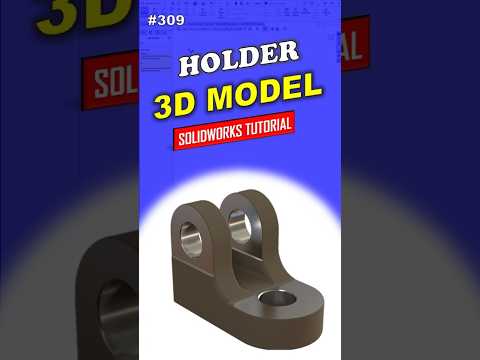
Are you ready to take your 3D design skills to the next level? Whether you are just starting out or looking to refine your CAD modeling techniques, learning SolidWorks through practical hands-on projects is one of the most effective ways to master computer-aided design. In this step-by-step guide, we will walk you through the process of creating a professional 309 Holder model from scratch.
Step 1: Setting Up Your Base Sketch
Every great 3D model begins with a precise 2D sketch. Start by opening a new part file and selecting the appropriate reference plane—typically the Top or Front Plane depending on your desired orientation. Use core sketching tools like lines, circles, and smart dimensions to outline the primary base of the 309 Holder. Always ensure your sketch is fully defined before moving to the 3D stage to maintain parametric integrity.
Step 2: Applying 3D Features and Refinements
Once your base profile is complete, it is time to transition from a 2D drawing to a 3D solid model. Apply the Boss Extrude feature to give your holder its initial volume and depth. Next, refine the geometry by using Cut Extrude features for mounting holes or functional slots, and apply fillets or chamfers to smooth out sharp edges. These finishing touches not only make the model visually appealing but also reflect real-world manufacturing standards.
Step 3: Best Practices for Professional CAD Modeling
When mastering SolidWorks, building good design habits early on will save you significant time during complex projects. Always keep your feature tree organized, use geometric relations where possible, and double-check your dimensions against project specifications. Adopting a structured approach ensures your models remain parametric, flexible, and easy to modify whenever design revisions are required.
Final Thoughts
Building practical components like the 309 Holder provides the perfect balance of basic geometry and functional design logic. By practicing these fundamental techniques regularly, you will build strong confidence in SolidWorks and prepare yourself for more advanced engineering challenges. Grab your design tools, open a blank canvas, and start modeling today!


