
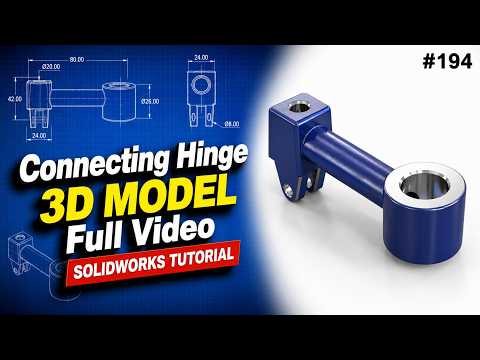
In the world of mechanical engineering and product design, precision is the foundation of every successful project. Whether you are a student, a hobbyist, or an aspiring professional, learning how to create functional mechanical components is an essential milestone in your CAD journey. Today, we are exploring the professional approach to modeling a 194 Connecting Hinge, a fundamental part used in countless mechanical assemblies and structural designs.
The Importance of a Professional Workflow When starting a new project, many beginners jump straight into the software without a plan. However, a professional approach involves understanding the geometry first. Modeling a connecting hinge requires a balance between aesthetic symmetry and functional accuracy. By following a structured tutorial, you learn not just which buttons to click, but the logic behind every feature, from the initial sketch to the final 3D part.
Building the Foundation The process begins with a clean, fully defined 2D sketch. This is where most of the "heavy lifting" happens. By setting up the correct constraints and dimensions from the start, you ensure that your model is robust and easy to modify later. This project is a fantastic way to familiarize yourself with the user interface and the powerful toolset available in SolidWorks. You will learn how to navigate the 3D space, manage your feature manager design tree, and apply geometric relations that keep your design intent intact.
From Sketch to 3D Reality Once the foundation is set, the transformation into 3D begins. Using core features like "Extruded Boss/Base" and "Hole Wizard," you will watch the hinge take shape. The tutorial covers the nuances of creating the pin barrel and the mounting leaves, ensuring that all parts align perfectly. Using SolidWorks for these tasks allows for a level of precision that is required in real-world manufacturing environments.
Final Refinements No model is complete without the finishing touches. Adding fillets to sharp edges and ensuring the tolerances are correct for the hinge pin are the final steps that separate a basic model from a professional-grade asset. By the end of this guide, you will have a solid understanding of how to tackle similar mechanical parts with confidence. Mastering these small components is the best way to prepare for complex assemblies and advanced engineering challenges.


