
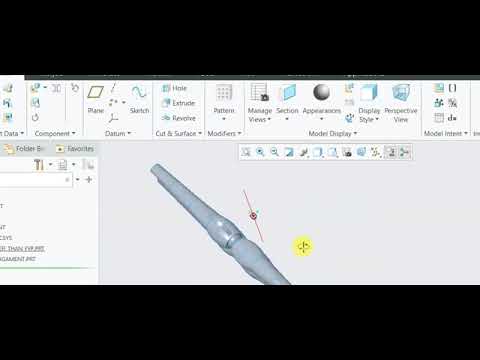
The knee joint is one of the most complex and highly stressed structures in the human body. Whether it is a professional athlete pivoting on the field or an individual performing daily activities, the ligaments—specifically the ACL, MCL, and LCL—are under constant pressure. Understanding how these tissues respond to stress is critical for improving surgical outcomes and designing better orthopedic implants. This is where the power of Finite Element Analysis (FEA) becomes indispensable.
Precision Modeling for Orthopedic Excellence
The journey to a successful biomechanical simulation begins with a high-fidelity 3D model. To achieve the necessary anatomical accuracy, engineers and researchers often utilize SolidWorks to develop the geometric foundations of the femur, tibia, and fibula. By creating a detailed digital twin of the knee assembly, users can define specific material properties that mimic human bone and soft tissue.
Using SolidWorks for the initial CAD phase allows for seamless integration with simulation software. This ensures that the intricate curves and attachment points of the ligaments are represented realistically, providing a stable base for the complex mathematical calculations that follow in the FEA process.
Simulating Gait and Athletic Impact
Once the model is ready, FEA is used to simulate various physical scenarios, such as a normal walking gait or high-impact sports movements. By applying forces that replicate a sudden stop or a lateral impact, researchers can visualize the stress distribution across the ACL (Anterior Cruciate Ligament), MCL (Medial Collateral Ligament), and LCL (Lateral Collateral Ligament).
These simulations help identify the "breaking point" of these tissues, offering valuable data to sports scientists and orthopedic surgeons. It allows for the prediction of injury patterns before they happen and helps in the customization of knee braces and reconstructive hardware.
From Research to Clinical Application
Beyond injury prevention, this engineering approach is vital for the development of medical devices. By testing an orthopedic implant design within SolidWorks and subjecting it to FEA testing, engineers can ensure the device will withstand years of repetitive use without failing. This reduces the need for physical prototyping and accelerates the transition from the laboratory to the operating room.
If you are a student or a professional working on an MSc/BSc dissertation or a commercial orthopedic project, expert assistance is available. From CAD modeling to advanced FEA simulations, professional support can help you achieve high-accuracy results for your biomechanical research.


