
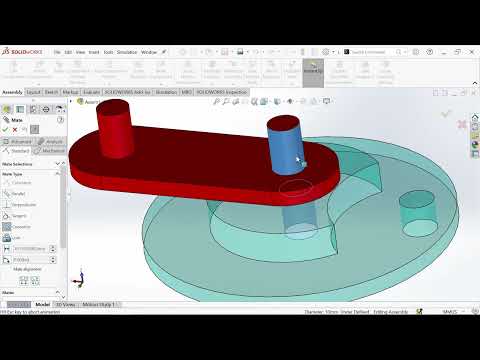
The Geneva mechanism—also known as the Geneva drive—is a classic mechanical movement used to convert continuous rotary motion into intermittent rotary motion. Widely used in film projectors, automated packaging, and indexable machinery, understanding this design is essential for any aspiring designer or engineer.
In this step-by-step tutorial, you will learn how to build, assemble, and visually demonstrate a working Geneva mechanism using SolidWorks 3D animation techniques.
Step 1: 3D Modeling the Geneva Mechanism Parts
Before running a realistic simulation, precise modeling is crucial. The mechanism relies primarily on two main components: * The Drive Wheel: Features a driving pin that engages with the slots of the driven wheel, alongside a locking disc to prevent unwanted rotation during stationary phases. * The Driven Wheel (Geneva Wheel): Contains equidistant radial slots where the pin enters, advancing the wheel step-by-step with each full rotation of the drive gear.
Using accurate dimensions and constraints ensures that the pin smoothly enters and exits the slot geometry without collision.
Step 2: Assembly and Establishing Dynamic Contacts
Once your 3D parts are modeled, insert them into a SolidWorks assembly environment. Apply concentric and coincident mates to define the fixed rotation axes. To prepare for dynamic motion, establish mechanical clearance so the components interact naturally.
Step 3: Motion Analysis and Simulation
The true power of modern CAD software lies in visual verification. By leveraging SolidWorks 3D animation through the Motion Study tab, you can assign a continuous rotary motor to the drive shaft and configure dynamic contact sets between the driving pin and the slot walls.
Running a motion study allows you to visually inspect mechanical interactions, optimize velocity parameters, and ensure smooth indexing. Mastering SolidWorks 3D animation not only validates your mechanical logic but also allows you to export high-definition promotional videos for client presentations and portfolio showcases.
Conclusion
Building a functional Geneva drive is a rewarding project that bridges the gap between static mechanical design and dynamic simulation. By following proper assembly logic and applying motion studies, you can bring complex kinematic designs to life. Check out the step-by-step video tutorial to start building your mechanical simulation today!


